
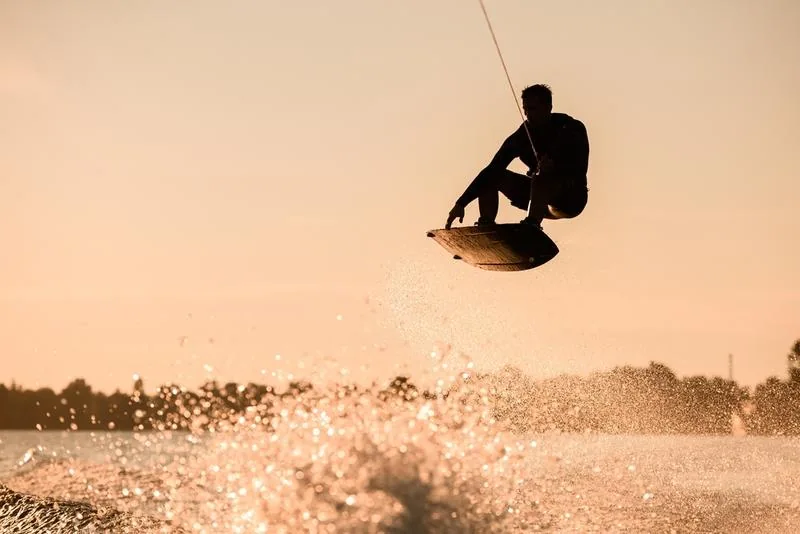
Wakesurfing has become one of the most popular ways to enjoy a day on the water, and Lake Anna provides an excellent setting for riders of different experience levels. Unlike traditional water skiing or wakeboarding, wakesurfing allows the rider to surf the wave created behind a properly equipped boat. After using a rope to get started, experienced riders can release the rope and continue riding the wave using the energy created by the boat. It combines elements of surfing and traditional tow sports while allowing riders to progress from simply standing on the board to carving, spinning, and performing more advanced tricks.
The first requirement for wakesurfing is the right type of boat. Wakesurfing should only be performed behind a boat designed for the activity with the propeller positioned safely beneath the hull and away from the rider. Traditional outboard and sterndrive boats place the propeller near the rear of the boat and should not be used for wakesurfing. Purpose-built inboard wake boats are designed with propulsion systems that keep the propeller underneath the hull while using ballast, surf systems, and specialized hull designs to create a surfable wave.
The boat itself has a major impact on the wakesurfing experience. Hull design determines how water is displaced, while ballast adds weight that helps increase the size of the wave. Surf systems can further shape the water behind the boat, allowing riders to surf on either side. Modern wake boats can often save different rider settings so the driver can quickly switch between configurations. This makes it easier for families or groups where several people ride differently.
Choosing the right wakesurf board is just as important as choosing the boat. Wakesurf boards are available in several styles, and different shapes are designed for different types of riding. Surf-style boards tend to resemble smaller ocean surfboards and often provide good stability and speed. Skim-style boards are generally thinner and can make spins and other technical tricks easier for experienced riders. Hybrid boards combine characteristics of both styles and can provide a versatile option for riders who enjoy different types of riding.
Board size should be matched to the rider's weight, skill level, and preferences. Beginners often benefit from a larger board because additional surface area provides more flotation and stability. A board that is too small can make it difficult for a new rider to stay in the wave, even if the boat is producing a strong surf wave. As riders progress, they may move to smaller boards or different shapes that allow them to turn more aggressively and perform tricks.
The wakesurf rope is another important piece of equipment. Wakesurf ropes are generally shorter and designed differently from wakeboard or ski ropes. Riders use the rope to get onto the board and move into the correct position within the wave. Once stable and moving with the wave, the rider can gradually reduce tension on the rope and eventually release it. The rope should never be wrapped around the rider's hand, arm, or body.
A properly fitting life jacket or personal flotation device should always be worn. Even strong swimmers can become disoriented after a fall, and wakesurfing involves repeatedly entering the water near a boat. A life jacket provides additional flotation and makes the rider easier to see. Make sure every rider uses a flotation device that fits properly and is appropriate for the activity.
Communication between the rider and driver is another important safety consideration. Before getting into the water, everyone should understand the basic hand signals used to request more speed, less speed, or to stop. The driver should know when the rider has fallen and should return carefully while remaining aware of other boats and people in the area. A dedicated observer can also help watch the rider and communicate with the driver.
Beginners should start by learning the proper position on the board. The rider normally begins in the water with the board positioned in front of their feet and the rope held securely. As the boat begins moving, water pressure pushes the board toward the rider's feet. Rather than trying to stand immediately, the rider should allow the boat to pull them gradually into a crouched position before standing.
Once standing, weight distribution becomes the key to controlling the board. Moving weight toward the front foot generally increases speed and moves the rider closer to the boat. Shifting weight toward the rear slows the board and allows the rider to move farther back in the wave. Beginners often lose the wave because they place too much weight on the rear foot and gradually fall behind. Learning to make small weight adjustments is one of the most important skills in wakesurfing.
The next step is learning to ride without the rope. Riders should not throw the rope away immediately after standing. Instead, hold it loosely and try to find a position where the rope develops slack. Slack indicates that the wave is pushing the board rather than the rider relying on the boat for forward movement. Once the rider can maintain that position comfortably, the rope can be released and thrown safely away from the rider.
Wave setup can make learning significantly easier. A larger, clean wave with plenty of push gives beginners more room to make mistakes. Boat speed, ballast, passenger placement, surf system settings, and board selection can all influence the wave. If a new rider repeatedly falls out of the wave even with good technique, adjusting the boat setup may help.
Lake conditions should also be considered. Wakesurfing is easier and more enjoyable in relatively calm water. Heavy boat traffic and rough conditions can make the wave inconsistent while increasing the challenge for beginners. When possible, riders may prefer quieter areas or times of day when traffic is lower. Drivers should always remain aware of shoreline, docks, swimmers, other boats, and local boating regulations.
Respect for other Lake Anna boaters and property owners is important as well. Wake boats produce larger waves than many recreational boats, especially when heavily ballasted. Drivers should give docks, shorelines, anchored boats, paddlers, and other water users adequate space. Responsible operation helps protect the lake and creates a better experience for everyone.
Your wakesurfing gear may eventually expand as your skill improves. Many families begin with one versatile board and later add boards for different rider sizes and styles. Board racks help keep equipment safely stored and reduce clutter inside the boat. Riders may also want additional ropes, life jackets, protective board bags, and other accessories depending on how frequently they surf.
One of the best parts of wakesurfing is that riders can continue progressing over time. The first goal may simply be getting onto the board. After that comes finding the wave, releasing the rope, carving, generating speed, and eventually learning tricks. Every rider can enjoy the sport at a different level without needing to compete with anyone else.
For Lake Anna families interested in wakesurfing, having the right boat and equipment makes the entire experience easier and more enjoyable. Mid-Atlantic Water Sports can help boaters explore wake boats, wakesurf boards, watersports equipment, and the features that contribute to a great surf setup. Whether you are completely new to the sport or looking to improve your wave, the right combination of boat, board, gear, and safe operating practices can lead to many memorable days wakesurfing on Lake Anna.