
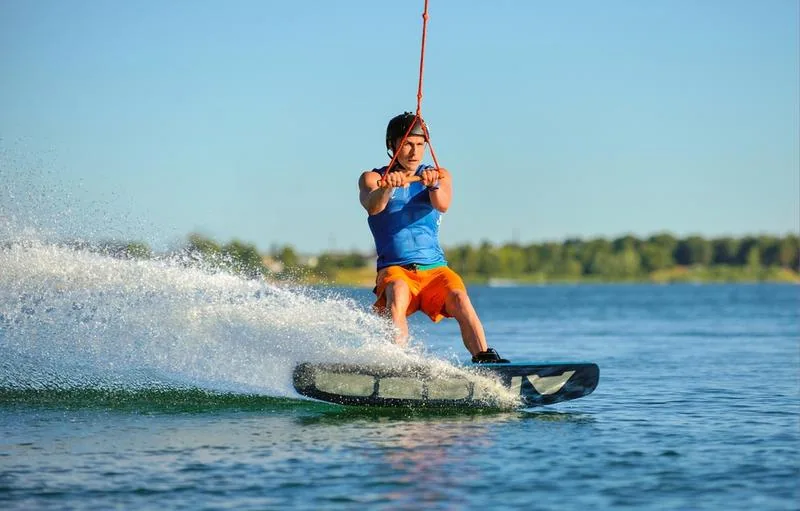
Choosing the right wakesurf board can make a major difference in how quickly you learn, how comfortable you feel behind the boat, and how much fun you have on the water. Many new riders assume that all wakesurf boards are essentially the same, but board size, shape, volume, fin configuration, rocker, and construction can all influence how a board performs. For Lake Anna riders, especially families who may have several people using the same boat, understanding the basic differences between wakesurf boards can help you choose equipment that fits each rider instead of forcing everyone onto the same setup.
One of the first things to consider is rider size. A larger or heavier rider generally needs more board volume and surface area to remain on top of the water and maintain speed in the surf wave. A board that is too small can make it difficult to stay in the pocket, even if the boat is producing a strong wave. Beginners usually benefit from a board that provides extra flotation because it gives them a larger margin for error. More advanced riders may prefer a smaller or more responsive board that allows faster turns and more aggressive tricks.
Skill level is equally important. New wakesurfers typically want stability and predictability. A wider board with more volume can make it easier to stand up, find balance, and learn how to use body position to control speed. Beginners are often still learning the relationship between their front and rear foot. Applying more pressure to the front foot generally helps the rider move forward in the wave, while shifting weight toward the rear slows the board down. A stable board gives the rider more time to feel these changes without immediately losing balance.
Once riders become comfortable getting up and riding without the rope, they may begin looking for a board that offers more performance. Intermediate riders often want something that still feels stable but responds more quickly when carving. At this point, board shape and fin setup become more noticeable. Different fins can influence how firmly the board tracks through the water. Larger fins generally provide more stability, while smaller fins may allow the board to release more easily during spins and other maneuvers.
Wakesurf boards are commonly divided into surf-style, skim-style, and hybrid categories. Surf-style boards generally have more volume and can feel similar to small ocean surfboards. They are designed to generate speed and provide strong carving performance. These boards can be excellent choices for riders who enjoy pumping down the wave, making large turns, and eventually attempting airs or more aggressive surf-inspired tricks.
Skim-style boards typically have a thinner profile and less volume. They often use smaller fins and can feel looser beneath the rider. This makes them popular with riders who want to perform spins, shuvits, and other technical tricks. The tradeoff is that skim-style boards may require more precise balance and wave position, making them less forgiving for someone learning for the first time.
Hybrid boards combine characteristics of surf and skim designs. They can provide enough volume for stability while remaining responsive enough for intermediate and advanced riding. For families who want one board that can accommodate several different riders, a well-designed hybrid can provide a practical compromise. However, a single board may not be ideal for every person, particularly if riders differ significantly in size or skill level.
Board length is another factor shoppers frequently notice, but length should not be considered by itself. A shorter board can still have significant volume if it is wide and thick, while a longer board may have a thinner profile. Manufacturers often provide recommended rider-weight ranges that can be more useful than simply comparing overall length. If you are unsure, choosing slightly more flotation is usually easier for a beginner than choosing a board that is too small.
The wave produced by your boat also influences board choice. A powerful wakesurf boat with a long, strong wave may allow riders to use smaller and more performance-focused boards. A smaller or less powerful wave may require additional board volume to help the rider maintain speed. This is another reason board selection should be considered together with the boat and surf setup rather than separately.
Fins can also change how a board behaves without requiring the rider to replace the entire board. Some wakesurf boards allow fins to be removed or changed. A beginner may start with a configuration that provides more tracking and stability. As the rider improves, changing or removing certain fins may create a looser feel that allows easier spins. Riders should make these adjustments gradually so they can understand how each change affects the board.
Construction materials affect durability, weight, and performance. Entry-level boards may be built to handle frequent use and the occasional bump against the boat or dock. Higher-performance boards may use lighter materials that improve responsiveness but require more careful handling. Families with children or several new riders may value durability more than saving a small amount of board weight. Advanced riders may be willing to take additional care of a lighter board in exchange for better performance.
Storage and transportation should also be considered. Wakesurf boards should be protected from unnecessary heat, impact, and prolonged exposure to sunlight. Board racks make it easier to keep equipment out of seating areas while on the boat, but owners should make sure the racks fit their specific boards. Protective board bags can also help prevent scratches and damage during transport or storage.
The best way to select a wakesurf board is to start with the rider rather than the board. Consider weight, skill level, riding style, and goals. A rider who simply wants to cruise comfortably in the wave needs something different from a rider learning spins or attempting airs. Families may eventually find that having two or three boards creates a better experience than expecting one board to work perfectly for everyone.
For Lake Anna riders, having the right wakesurf board can make learning easier and progression much more enjoyable. Mid-Atlantic Water Sports can help riders compare wakesurf boards and other watersports equipment based on experience level, size, and riding preferences. Pairing the right board with the right wake boat setup gives every rider a better opportunity to enjoy their time behind the boat.